India, China must further strengthen business ties for growth.

'Once positions are hardened and troops start building defences, it is difficult for soldiers to step back.'

India and China on Monday admitted to intrusion by Chinese herdsmen into Ladakh last week but both the sides sought to play it down saying the issue was resolved amicably through a flag meeting.
The international community must be clear that such a behaviour is unacceptable, a top US senator said.
The sources said there was clear sign of withdrawal of structures and troops from the patrolling point 14 in Galwan Valley and that they are likely to move back more than a kilometre in the area.
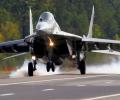
The Indian Air Force carried out intensive night operations involving its fighter aircraft including the MiG-29 and Sukhoi-30MKI along with its Apache attack helicopters and the Chinook heavy-lift helicopters.

Both sides have completed creation of a buffer zone of three kilometres in the three friction points of Galwan Valley, Gogra and Hot Springs as part of a temporary measure aimed at reducing the possibility of any confrontation.

India has realised that one can only deal with China from a position of strength and that is not palatable to Beijing, observes Dr Rup Narayan Das.

'However, a lot of preparatory work would have to go in and China must be prepared to announce an end to the standoff by disengaging from the remaining areas along the LAC.'
A day after the nearly 13-hour meeting, the two sides in a joint statement on Saturday reaffirmed that such a resolution would help restore peace and tranquillity along the Line of Actual Control (LAC) in eastern Ladakh and facilitate progress in bilateral relations.

The gap between the existing air bases in China close to the LAC for fighter aircraft operations was around 400 kms but this would be bridged with the operationalisation of the Shakche airfield.
At an online media briefing, External Affairs Ministry Spokesperson Anurag Srivastava gave a run down of the events along the LAC in the eastern Ladakh region and held China responsible for the Galwan Valley clashes off June 15.

In the first highest level face-to-face contact between the two sides after border tension erupted in eastern Ladakh in early May, Singh and Wei met for two hours and 20 minutes in Moscow on Friday evening on the sidelines of a meeting of the defence ministers of the Shanghai Cooperation Organisation.

The talks took place over video call on Sunday. According to sources, talks were held for over two hours in a cordial and forward-looking manner.

A deft hand on India-China relations, Bambawale earlier handled the China desk at the MEA.

"India and China are in communication and negotiations on lowering the temperatures through military and diplomatic channels. No party should engage in any action that may escalate the situation at this point," Chinese Foreign Ministry spokesperson Zhao Lijian said during a briefing when asked about the Prime Minister's visit.

'Neither will China -- at least for now -- because its troops are deployed in equal strength.' 'We are negotiating at equal terms right now and it's a game of patience.'

'If the Chinese were keen to mend fences with India, they would merely have to withdraw their troops in Eastern Ladakh.' 'They have not done so and they have not said that they will do so.'

"I am not aware of the information you provided," Chinese foreign ministry spokesman Zhao Lijian said in Beijing when asked about the reports of the Indian casualties at the contested borders. "Our border troops had a high-level meeting and reached important consensus on easing the border situation but astonishingly, on June 15, the Indian troops seriously violated our consensus and twice crossed the border line for illegal activities and provoked and attacked Chinese personnel which led to serious physical conflict between the two sides and China has lodged strong protest and representation with the Indian side," Zhao said.

'We can expect heightened belligerence from China.'
'We hope this round of meeting, on the basis of previous meetings, can move forward, further enlarge consensus, narrow differences and work for a solution that is acceptable to both parties,' the spokesperson said in updated comments posted on the ministry's website.

The Centre on Tuesday told the Supreme Court that China has made a huge build-up in the Tibet region and the Army needs broader roads to move heavy vehicles up to the India-China border to avoid a 1962 war-like situation.

The sources said Singh will carry out a comprehensive review of the security situation in the region with Gen Naravane, Northern Army Commander Lt Gen Yogesh Kumar Joshi, Commander of the 14 Corps Lt Gen Harinder Singh and other senior army officials.

'The military advantage the Indian Army had gained by the Special Frontier Force occupying the heights of the Rezang La-Rechin La ridge on the Kailash Range is lost without the PLA withdrawing to east of the Khurnak Fort line.'

'India has to prepare for future warfare where kinetic use of force at the border will be limited. War will take place in the realms beyond the border.'

Xi arrived at the Nyingchi Mainling Airport on Wednesday and was warmly welcomed by local people and officials of various ethnic groups, Xinhua news agency reported.
'In South Asia, unlike Southeast, East, or Central Asia, there is a natural hegemon: India. China cannot cast it aside easily'
The officials said the focus of the talks was on 'full and enduring restoration of peace and tranquillity' along the border and also better coordination to ensure avoidance of such incidents in future.

The Chinese have only created limited defences for protection of their posts which are located well in depth and much away from the Line of Actual Control, notes Colonel S Dinny (retd).

India has over 4,000 medium tanks, but not a single light tank. It remains to be seen whether the Ladakh face-off with China galvanises a change, observes Ajai Shukla.

Congress leader Adhir Ranjan Chowdhury aid that India must tackle Chinese aggression using all necessary means.
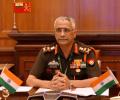
The Army Chief further spoke about the situation at other friction points where China was aggressive like Gogra Hotsprings.
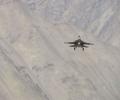
The entire base is seeing a flurry of activity and is playing a crucial role in enhancing the combat preparedness of the country along the China border.
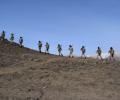
The MEA said it was the Chinese side that recently undertakook activities hindering India's normal patrols in the areas.

The roads will reduce the distance to the border considerably and make easier the movement of Indo-Tibetan Border Police personnel, who at present have walk up to 25 kms to reach there, officials said.
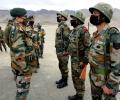
India, China have agreed to hold another round of talks soon.

The Indian Olympic Association (IOA) is open to boycotting Chinese products and sponsors in the wake of the border clash between the two countries at Galwan valley earlier this week. Anti-China sentiments are running high in the country after the first skirmish at the India-China border in more than four decades left at least 20 Indian soldiers dead.

'Why wouldn't so strategically-minded an adversary, such as China, not militarily exploit to the maximum Indian timidity, stupidity, and cupidity all along the LAC and legitimate, as it has done so often in the past, the fait accompli of incremental territorial grabs which, by the way, is its strategy and policy as implemented on the ground?'
'Both have a very nationalistic view of foreign policy.' 'They think they are shrewd and clever diplomats.'

The army has long been deficient in artillery, the modern battlefield's most lethal killer, says Ajai Shukla.
